
Blog
- Details
- Hits: 531

The Future of Renting in Scotland: Tackling the Supply Crisis Together
Scottish Letting Day 2025 once again brought together the sector’s most passionate voices — landlords, agents, policymakers, and investors to discuss the future of housing in Scotland.
This year, our team at Logan Property had the privilege of contributing to that conversation. Managing Director/CXO, John Logan and Head of Business Development, Natalie Simpson took to the stage to deliver our session: “The Future of Renting in Scotland: Tackling the Supply Crisis Together.”
We were delighted to see such a strong turnout and a lively Q&A afterwards proof, if ever it were needed, that this is a debate that matters deeply to everyone in the room.
And yes, our Stand (No. 1!) was buzzing all day. From the “Wheel of Fortune” to our prize draw, it was fantastic to see so many delegates and exhibitors stop by for conversation, collaboration, and a bit of fun.
A Market Under Pressure
Our message was clear: Scotland’s rental and general property market is at a crossroads.
Demand for homes has surged, yet supply continues to shrink. In key cities like Edinburgh and Glasgow, more than 20 people are competing for every available rental property and in our own recent experience, over 60. Not a nice tenant experience.
Rents are climbing, affordability is tightening, and landlords feeling the squeeze of rising costs and regulatory pressures — are increasingly exiting the sector.
This isn’t just a numbers problem; it’s a people problem. Every property lost from the private rented sector represents a home that no longer exists for someone who needs it.
The Role of the Small Landlord
John reminded delegates that independent landlords still provide the majority of Scotland’s rental homes.
These are individuals and families who have invested locally, often managing just one or two properties. Yet, the data tells a worrying story:
- Small landlords (with one property) have fallen from 94% to 72% of registrations since 2019.
- SAL’s 2024 survey suggests that over 52,000 homes have been lost from the sector in just two years.
- The top reasons? Hostility from politicians (79%), rising regulation (70%), and concern over rent controls (62%).
Protecting tenants is crucial but so is protecting the people who provide the homes. As John put it:
“When small landlords succeed, renters benefit.”
Build to Rent – A Modern Solution
Natalie then explored the Build to Rent (BTR) model as a key part of Scotland’s housing future.
BTR developments purpose-built, professionally managed, and designed for community living can deliver scale and quality quickly. However, the sector faces significant barriers:
- Policy uncertainty, especially around rent controls.
- Planning delays leaving 14,000+ homes stuck in the development pipeline.
- Rising build costs, labour shortages, and investor caution.
Despite this, there is optimism. With clearer policy, planning reform, and public-private collaboration, BTR could help reshape Scotland’s rental landscape creating more sustainable, tenant friendly homes.
Collaboration Over Confrontation
Our key message? We cannot solve this crisis by treating landlords, developers, and tenants as opposing sides.
Instead, we need shared responsibility and smart policy that supports affordability and viability.
That means:
- Consulting meaningfully with landlords and tenants.
- Encouraging innovation from tech platforms that improve transparency to local incentives for affordable lets.
- Supporting education and dialogue to build trust across the sector.
Because, as Natalie concluded:
“Housing isn’t just a market it’s the foundation for opportunity. We owe it to every renter in Scotland to get this right.”
Keeping the Conversation Going
Our talk clearly resonated. The BTR and Mid-Market Rent topics carried over into the main policy panel later in the day sparking lively debate among representatives from the major parties (with the exception of the Greens, who were a no show) and highlighting just how urgent these issues have become.
The takeaway? Everyone recognises the problem. Now we must come together to deliver the solution.
So, here’s our question to you and to the wider property community:
How do we build a rental market that truly works for everyone tenants, landlords, and investors alike?
We’d love to hear your thoughts. Join the conversation and help shape the future of renting in Scotland.
- Details
- Hits: 535
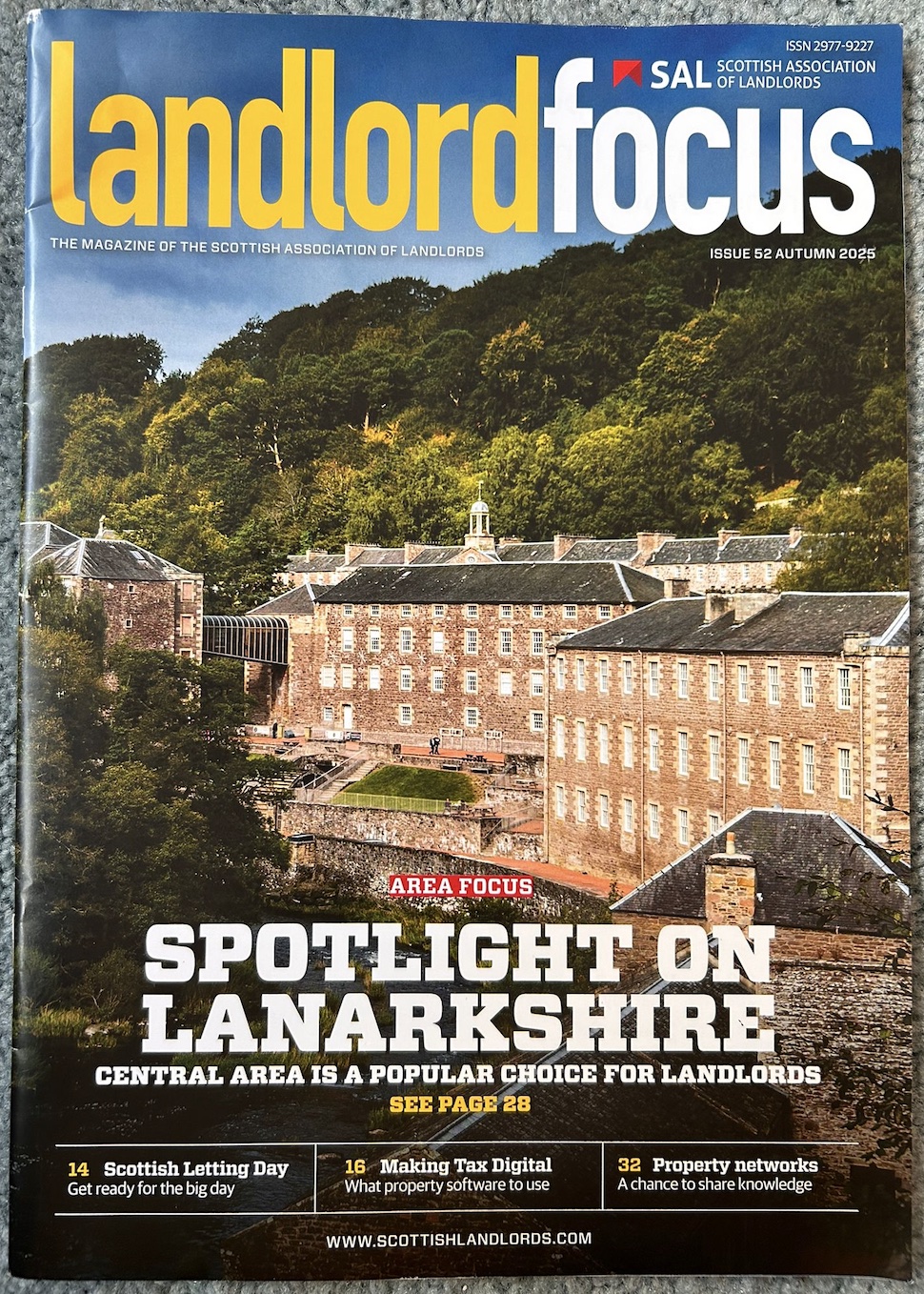
Autumn Buzz: Landlord Focus Magazine and What’s Coming at Scottish Letting Day 2025
Autumn has arrived and with it, one of our favourite reads of the year: the Autumn issue of Landlord Focus Magazine!
This edition is packed full of great content for anyone involved in Scotland’s private rented sector — from helpful insights and updates to a bit of lighthearted fun. You’ll even find a Private Rented Sector facts and figures quiz to test how well you really know the market!
We’re delighted to have our advert on the back page of this issue, sitting alongside some really interesting articles and a handy guide to what’s in store at Scottish Letting Day 2025.
Speaking of which… it’s nearly here! Scottish Letting Day takes place next Tuesday, 21st October, and it’s always one of the highlights of the year for anyone working in the sector. We’ll be there both exhibiting and speaking, and we can’t wait to catch up with familiar faces (and meet some new ones too!).
It’s always such a great day for networking, sharing ideas, and finding out what’s next for the private rented sector in Scotland. If you’re heading along, make sure to pop by our stand and say hello — we’d love to chat.
In the meantime, grab yourself a copy of Landlord Focus Magazine and enjoy a good read with your coffee. It’s a great warm-up for what promises to be another fantastic Scottish Letting Day next week!
- Details
- Hits: 643

In a fast-moving property market, first impressions count—more than ever. Today, buyers and tenants often make decisions before they even step foot inside a property. That’s why a hero shot the standout photo that captures the essence of your home—is so crucial. A professionally styled, well-lit image can instantly grab attention online, drive viewings, and set the tone for how your property is perceived.
But a great photograph is only part of the story. The way your home is presented, both in images and in person, can make a huge difference to its perceived value. This is where the “dress to sell” concept comes in. Just like staging a fashion shoot, your property benefits from thoughtful preparation and interior styling. Neutral tones, clutter-free spaces, and strategic décor choices allow buyers to envision themselves living there—and they’ll be willing to pay more for it.
“Small touches like fresh flowers, well-placed mirrors, or updating a tired kitchen handle can make a surprising difference,” says Natalie Simpson, Business Development Manager. “It’s about enhancing your home’s best features so it appeals to as many potential buyers as possible.”
Tips to Enhance Your Home Before Sale
- Declutter and depersonalise: Less is more when it comes to allowing buyers to imagine themselves in the space.
- Focus on key rooms: Living areas, kitchens, and master bedrooms have the most impact.
- Lighting matters: Bright, natural light makes rooms feel bigger and more welcoming.
- Small upgrades: Fresh coats of paint, modern handles, or stylish accessories can refresh a space inexpensively.
- Professional photography: Always invest in quality images your hero shot is often the first impression buyers will have.
Preparation doesn’t need to be overwhelming. With the right guidance, small changes can maximise your property’s appeal, attract more viewings, and ultimately help achieve a higher sale value.
Whether you’re selling, letting, or simply preparing your property for the market, having an expert by your side ensures that every detail counts.
👉 For more tips on preparing your home to sell or let, follow our LinkedIn and Instagram pages for advice straight from the front line of Scotland’s property market.
- Details
- Hits: 614

WHY UNDERSTANDING BOTH SALES AND LETTINGS MAKES A BETTER SCOTTISH AGENT: SPOTLIGHT ON SOUTHSIDE EDINBURGH
In Scotland’s fast-moving property market, whether you’re renting or buying, having the right agent can make all the difference. From bustling Edinburgh flats to family homes across the country, agents who understand both sales and lettings are in the best position to guide clients with confidence.
“In the same morning, I was assisting tenants queueing for one-bedroom flats in Bread Street while also advising buyers competing for nearby properties. Experiencing both sides of the market side by side provides valuable, first-hand insight into what clients truly need—whether they’re renting, buying, or selling.” — Natalie Simpson, Business Development Manager
Why Dual Expertise Matters
Renters and buyers might approach the market differently, but the trends often overlap. Rental demand can point towards where sales interest is heating up, and vice versa. That means an agent with a foot in both worlds can spot shifts early, guide clients on pricing, and help them move at the right time.
Natalie explains:
"Over the past few weeks in the Southside particularly Newington, Marchmont, and Blackford we have noticed two clear trends. Flats with good outdoor space remain popular and are being snapped up almost immediately, whether for rent or purchase. A two-bedroom flat with even a small garden near good transport routes can attract long rental queues and secure quick sales. At the same time, properties priced just above the Southside average such as slightly larger flats or modest townhouses are taking a little longer but not much to secure offers unless they are impeccably presented (more about that in next week’s blog). Clean finishes, modern kitchens, and strong transport links often make the deciding difference.
What this tells me is that tenants want comfort and convenience within budget, while buyers are prepared to pay a premium for quality and location. For both, value is increasingly about lifestyle rather than just square footage.”
Lessons for Renters and Buyers
For renters in the Southside, preparation is everything. Having references and deposits ready can be the difference between securing a flat or missing out. Buyers, meanwhile, are learning that competition is fierce and timing is crucial but understanding the rental market also helps them judge which properties will hold their value or make sound investments. Recent examples underline this perfectly. Two-bedroom flats in EH9 and EH10 are letting for around £1,800/month, well above the Edinburgh average.
Meanwhile, similar homes put up for sale are going under offer in just 20 days, far quicker than this time last year. Outdoor space, good presentation, and strong transport links are not just nice extras anymore they remain are decisive factors for both groups.
What This Means for Landlords and Sellers
For landlords, it highlights the importance of setting realistic rents and choosing tenants carefully to ensure long-term stability. For sellers, it’s a reminder that showcasing a property’s rental potential can attract investors as well as homebuyers.
As Natalie puts it:
“Helping landlords and sellers understand both markets ensures stability while maximising their opportunities.”
Being a Scottish property agent who works across sales and lettings isn’t just an added benefit it’s essential. It gives us the perspective to anticipate trends, provide better advice, and deliver smoother outcomes for clients whether they are renting, buying, or selling.
Thinking of renting, buying, or selling in Scotland? Follow our LinkedIn page for more expert insights, market updates, and tips straight from the front line.
- Details
- Hits: 634

FROM QUEUE TO KEYS: SURVIVING EDINBURGH’S COMPETITIVE RENTAL MARKET
Last week, 60 hopeful renters turned up for viewings of a super cute one-bedroom flat in Edinburgh’s City Centre. Similar scenes unfolded earlier in the month at properties in the Old Town and Leith areas, where our team hosted prospective tenants over the course of two days of viewings. For many, the experience felt more like competing for concert tickets than finding a home.
For tenants these queues are more than just an inconvenience they’re a story about what’s really happening in Edinburgh’s rental market right now.
A City of Renters in Waiting
One-bedroom flats have become the hottest property in town. With average rents in Edinburgh climbing to around £1,500 a month, smaller properties are often the only option for young professionals, students, and couples starting out. It’s little wonder that when a one bed comes on the market in Leith or the Old Town, dozens of applicants appear overnight.
But it isn’t just about price. Edinburgh’s compact city centre, with its cobbled streets like Cockburn Street and city centre location like Bread Street, offers walkability, history, and convenience all things renters are willing to queue for.
Why the Queues Are So Long
- Too Few Homes: New rental developments have slowed, with Scotland seeing fewer build-to-rent projects than in anticipated coming out of the ground.
- Tenants Staying Put: With rent controls limiting increases, many renters are holding onto their leases, meaning fewer properties come back onto the market.
- More Competition: Edinburgh remains a magnet for students, workers, and overseas renters all chasing the same limited supply.
The result? One modest flat in the City Centre can draw 60 applicants, each hoping to be the one who gets the keys.
What It Means for Tenants
For renters, the process can feel daunting. It’s no longer about browsing listings at leisure it’s about being fast, prepared, and decisive. Having references, guarantors and deposits ready can make the difference between getting the flat or watching someone else sign the lease.
What It Means for Landlords
For landlords, the queues might feel like a positive problem, but there are lessons too. Choosing the right tenant carefully, being fair on pricing, and keeping good tenants long-term are smarter strategies than chasing short-term gains. In a market under constant policy change, stability is valuable.
Looking ahead
The demand on properties shown recently in Leith, Old Town, and City Centre are a snapshot of a deeper imbalance in Edinburgh’s housing market. Demand keeps rising while supply struggles to keep up. Until more homes are built and confidence returns to the rental sector, these long lines will continue to be a feature of the city’s rental story.
For now, Edinburgh renters will need patience, preparation, and perhaps a little luck. And landlords? They’ll need to balance opportunity with responsibility in one of the UK’s most competitive rental markets.
Why the Right Agent Matters
In such a competitive property market, having the right agent by your side isn’t just helpful it’s essential. The right agent will not only market your property effectively but also manage viewings, screen enquiries, and negotiate on your behalf to secure the best outcome. With so many moving parts and changing legislation, it’s about more than just getting the deal done, it’s about having someone you trust to guide you through the process smoothly. That’s exactly what we pride ourselves on: combining deep local knowledge with a hands on approach that makes all the difference.
Have you been caught up in Edinburgh’s rental queues? Share your experience—we’d love to hear your story.